Most attempts at tracking a pantry fail in the same way. You spend a Sunday emptying cupboards, entering everything you own, and admiring the result. Nine days later the record says you have chickpeas and you do not, and you stop trusting it. Once you stop trusting it, you stop opening it, and the whole thing was a waste of a Sunday.
The problem was never the effort. It was the goal.
A pantry list is not an inventory
An inventory tries to be complete. It wants every tin, every jar, every bag of flour, accurate at all times. That is a warehouse problem, and your kitchen is not a warehouse: things get used mid-week, half-used, decanted, and eaten straight from the packet by someone who did not tell you.
Completeness is unreachable, and chasing it is what makes the record collapse. A list that is 60% right and current beats one that was 100% right a month ago, because you will actually consult the first one.
What “answering dinner” actually means
The record only has one job: to give a usable answer to “what could I make right now, and what am I missing”.
That is a much lower bar than knowing everything you own. It means knowing about the things recipes ask for repeatedly, and the things that run out without announcing it. Whether you have half a bag of pearl barley is almost never the question standing between you and dinner.
Choose the fastest input for the moment
The record has to build itself out of things you were already doing, or it will not get built. Different moments suit different inputs.
- A receipt after a full shop, which captures a dozen items in one go
- A barcode for a packaged product, when you want it exact
- A photo of what is on the counter, before it gets put away
- Manual entry for a correction, or the one thing that came from a market stall
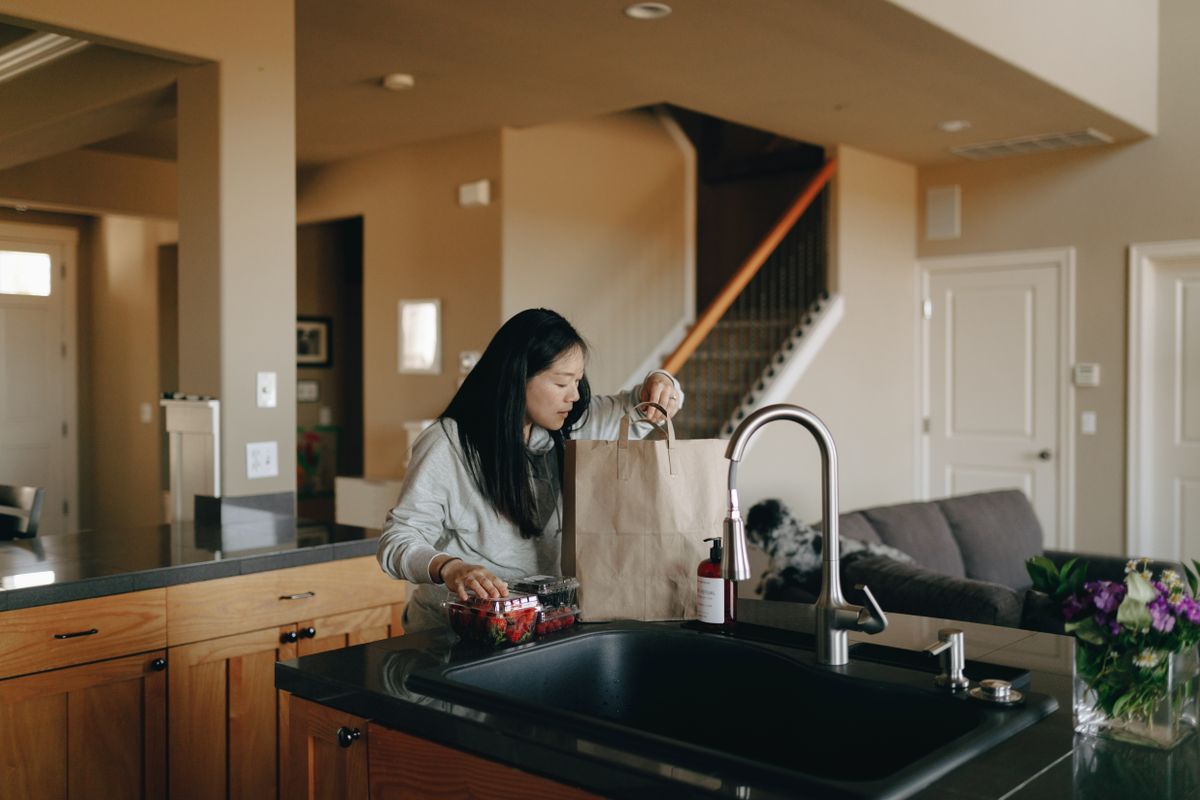
The receipt is doing most of the work here, and it is worth leaning on. A weekly shop is the single moment when the largest number of items enter the kitchen at once, and it is also the moment you are holding a complete list of them.
Track what changes decisions
Be deliberately selective. The useful part of a kitchen record is smaller than people expect, and it clusters in three places.
First, the staples you cook with weekly, because their absence cancels plans. Second, the things that run out unexpectedly, which are usually the ones you do not see: stock cubes, a particular spice, the last of the rice. Third, whatever is about to turn, so it gets used rather than quietly binned.
Everything else can stay untracked without costing you anything. The bag of sugar is not going anywhere, and neither is the tin of golden syrup at the back.
Let the record go stale in the right places
Some inaccuracy is fine, and pretending otherwise is what kills these systems.
Being wrong about how much olive oil is left costs nothing; you will notice when you pour. Being wrong about whether you have any is what sends you out mid-recipe. So the resolution that matters is usually binary — have it, do not have it — rather than exact quantities. Chasing precision you do not need is the fastest way to make updating feel like a chore.
Use the pantry against a real recipe
A pantry record in isolation is just a list of food, which is not interesting. It becomes useful at the moment it is compared with something you are actually thinking about cooking.
That comparison does two things at once. It tells you which saved recipes are already within reach tonight, which is how you avoid the forty-minute scroll. And for the ones that are not, it tells you exactly what is missing, which is a shopping list built from the gap rather than from the whole recipe.
This is also the point at which keeping the record current stops feeling like admin. It is paying you back on a Tuesday evening, which is when you needed it.
The first two weeks
Do not start by cataloguing the kitchen. Start by scanning one receipt.
After the next shop, scan it and let those items land. Then, over the following fortnight, add things only when you happen to be holding them: barcode the jar you just opened, photograph the vegetables before they go in the drawer. You are not trying to reach completeness. You are trying to reach the point where a recipe check comes back mostly right.
For most kitchens that takes two shops. It is a far smaller commitment than the Sunday project, and unlike the Sunday project it survives.
When the record and the shelf disagree
They will, regularly, and the fix is a habit rather than an audit.
When you reach for something and it is not there, correct it then, in the ten seconds while you are annoyed about it. That single habit does more for accuracy than any scheduled tidy-up, because it targets exactly the items that are causing problems and ignores the ones that are not.
A pantry record maintained this way is never quite right, and never wrong about anything that matters. That is the version that lasts.