Keeping a pantry current sounds like data entry, and data entry is the reason most kitchen inventories die within a fortnight. Nobody is going to type in forty items after a shop.
So the useful question is not how to be more diligent. It is how to record what you have with the least effort at the moment when the information is already in front of you. There are four ways in, and each one suits a different moment.
01. Scan the receipt
This is the highest-yield option, because a receipt is already a complete list of everything you just bought, priced and itemised, produced without you doing anything.
Scan it when you get home and a whole shop lands at once. This is the method that makes the difference between a pantry that reflects reality and one that reflects the week you started using it.
Receipts are imperfect. Shop abbreviations are cryptic, and loose produce sometimes arrives as a weight rather than a name. Fix the few lines that need it and move on; a pantry that is ninety per cent right is enormously more useful than one that is empty.
02. Scan the barcode
Best for the single item, and best for the things you buy repeatedly. A barcode resolves to a specific product with a specific size, which is exactly the detail that gets lost when you type “tomatoes” and hope.
It is also the natural method for putting something back. When you open the last tin, scanning it as you use it keeps the count honest without a separate stocktake.
03. Photograph the item
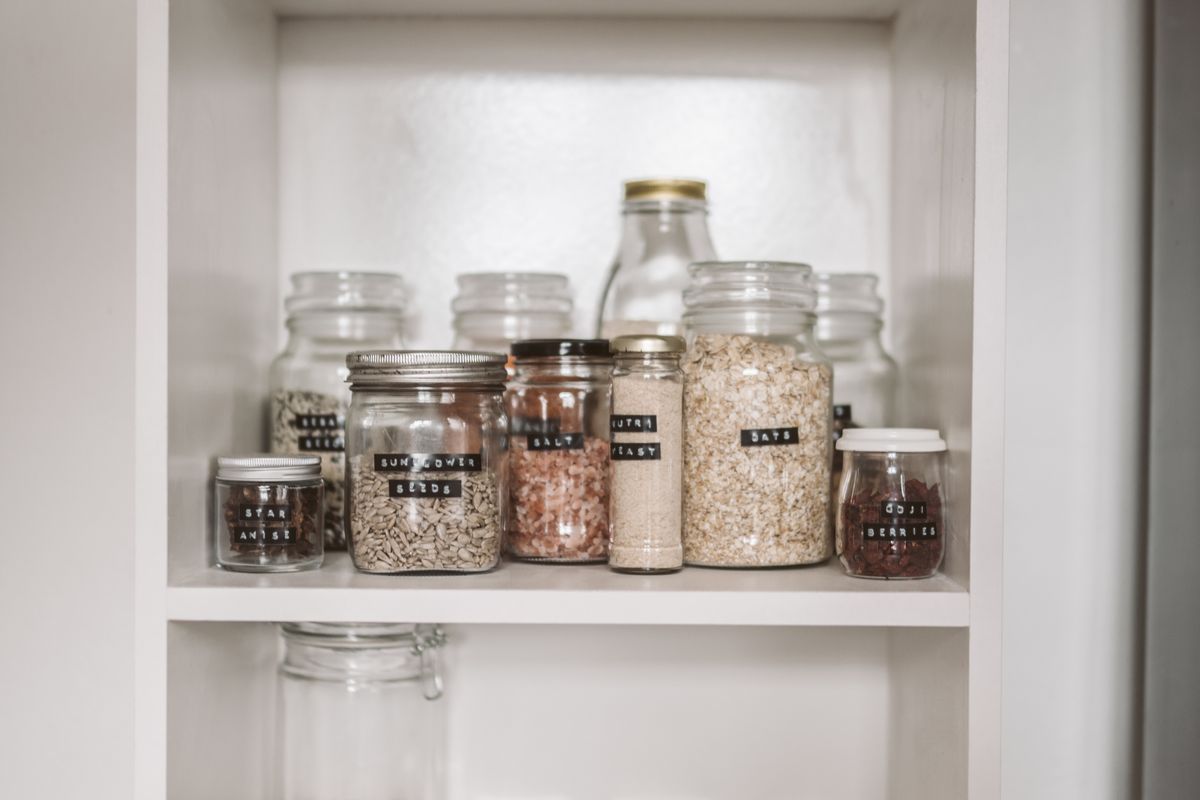
For everything without a barcode, which is most of the good stuff. Produce, bread from the bakery, cheese from the counter, the bag of lentils decanted into a jar three months ago.
Photographing a few items together is faster than adding them one at a time, and it works for the things a receipt describes badly.
04. Add it by hand
Still the right answer sometimes. A single item, a correction, a note that the jar is nearly empty. Manual entry is the escape hatch, and a system without one becomes a system you have to fight.
Pick the method that matches the moment
In practice most people settle into a pattern within a week or two:
- Big shop → scan the receipt, once, at the counter while unpacking
- Top-up shop → barcode the few things worth tracking
- Market or deli → one photo of the haul
- Anything else → add it by hand in ten seconds
Where week one goes wrong
Almost every abandoned kitchen inventory fails the same way. Someone sets aside an evening, empties every cupboard, and enters two hundred items by hand. It is thorough, it takes three hours, and it is never repeated.
Two weeks later the record is wrong in a dozen small ways, nobody trusts it, and it quietly stops being opened. The effort was not wasted because it was too small. It was wasted because it was too big to sustain.
Start from today instead. Do not catalogue what you own; simply capture what comes in from now on. After two shops the pantry will cover most of what you actually cook with, because the things you buy repeatedly are the things you use repeatedly.
Make it part of unpacking
A habit survives when it attaches to something that already happens. Unpacking the shopping already happens, every week, without needing to be remembered.
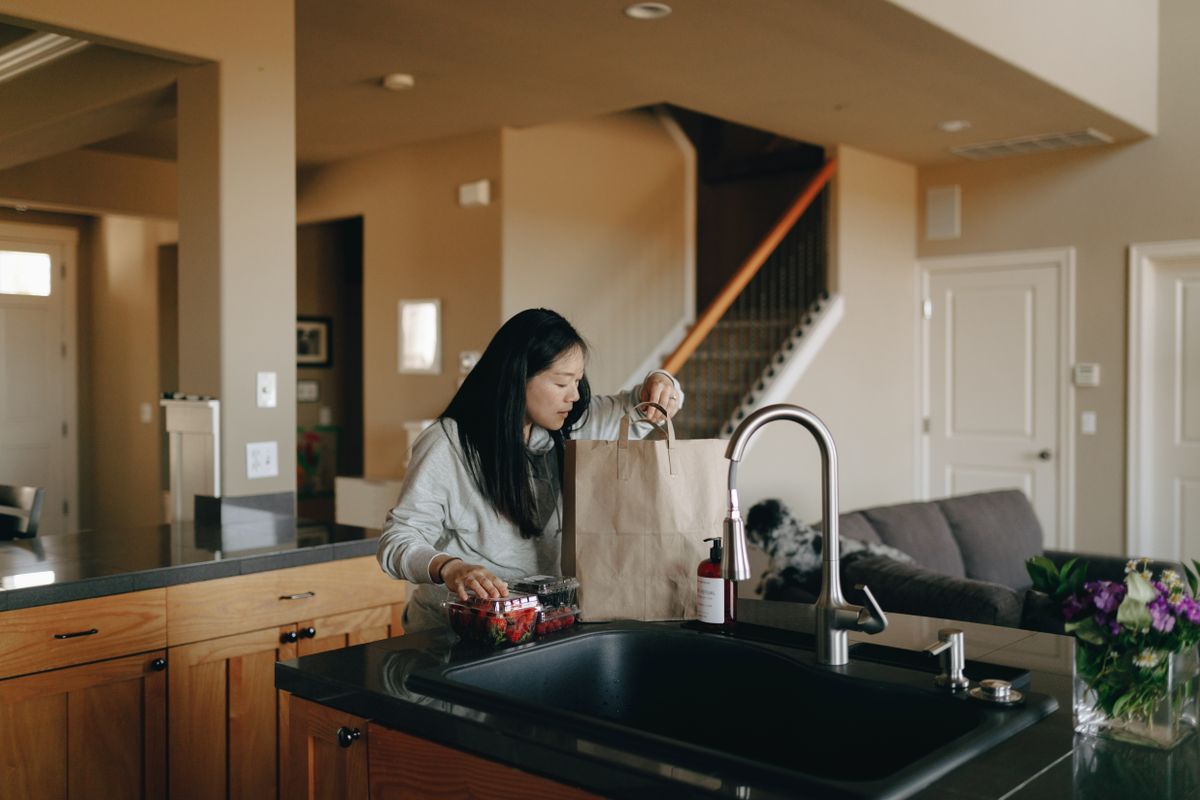
Scanning the receipt while the bags are still on the counter takes a few seconds and requires no separate decision. Doing it later, as its own task, requires remembering, and that is the step where it fails.
The same applies at the other end. Scanning or ticking something as you finish the packet works because you are already holding the empty packet. Any system that asks you to go back and reconcile later is asking for an evening you are not going to give it.
Good enough beats complete
The instinct is to record everything perfectly. Resist it. A pantry does not need to be an audit; it needs to answer one question well: what can I cook right now.
That question only depends on the things that change what you can cook. The staples that are always there need almost no attention. Salt is not the reason dinner did not happen.
Track the proteins, the fresh things with a clock on them, the tins and jars you actually reach for, and the two or three items you keep buying twice. Let the rest look after itself.
A pantry that is roughly right and effortless to maintain will outlast a perfect one every time, because the perfect one stops being updated by the second week.