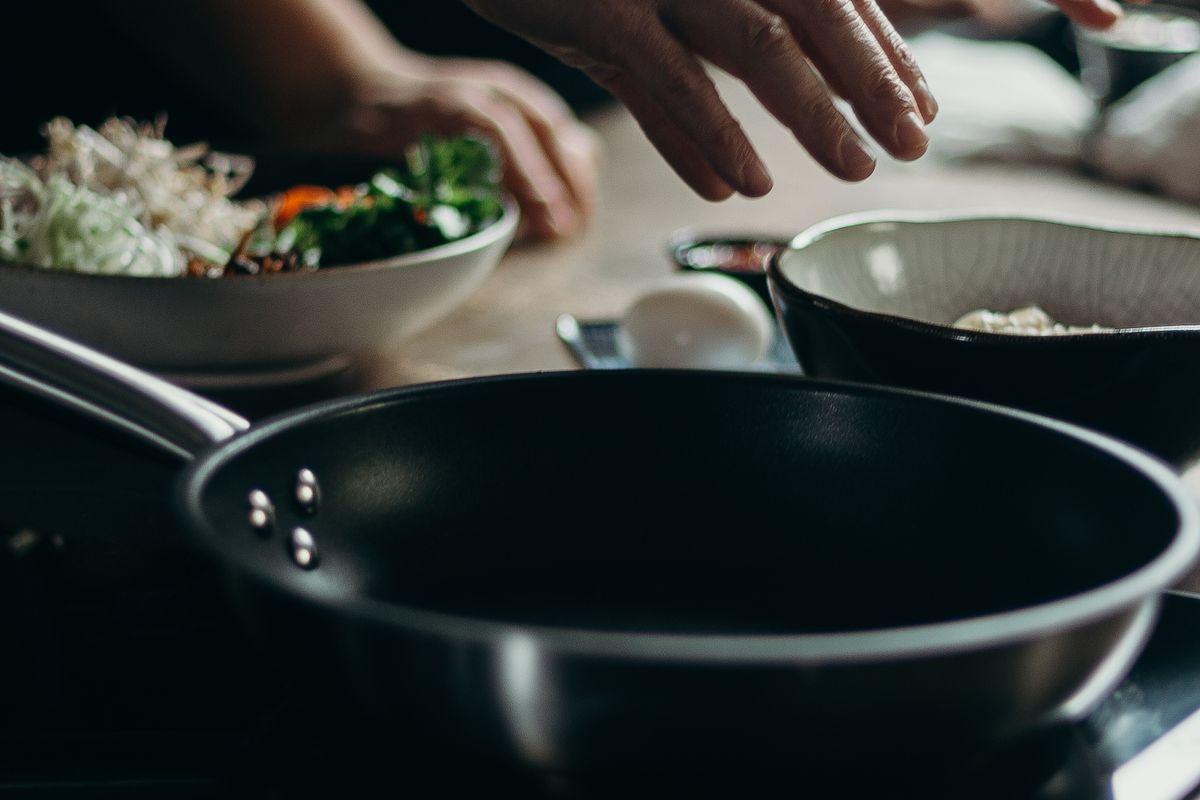
There is a particular moment in every recipe where the phone becomes a problem. Your hands are wet, or floury, or holding a hot pan, and the screen has gone dark on step four.
You wipe a hand on a tea towel, wake the phone, scroll back to find your place, and lose the thread of what you were doing. The cooking was going fine. The interface got in the way.
The screen is the interruption
Most recipes are written to be read, not to be cooked from. They arrive as one long block of text with the ingredients at the top and the steps below, which is fine at a desk and awkward at a stove where you need one instruction at a time and both hands free.
Cook mode exists to fix that shape. Same recipe, different presentation: large text, one step in view, and timers attached to the steps that need them.
Set the station before the heat
The single biggest reduction in mid-cook screen time happens before anything is switched on. Read the recipe through once, then get everything out.
- Pull every ingredient onto the counter, so a missing item is a problem now and not in six minutes
- Do the chopping the recipe assumes you have already done
- Put the pan you will need on the hob and the bowl you will need beside it
- Prop the phone somewhere you can see it without touching it
Recipes routinely hide fifteen minutes of preparation inside a phrase like “add the diced onion.” Front-loading that work is what makes the cooking itself feel calm.
One step at a time
Showing a single step is not a cosmetic choice. It removes the small navigational task of finding your place, which is the thing that actually costs attention when a pan is hot.
It also makes it obvious when a step is doing too much. “Brown the meat, soften the onions, add the stock and reduce by half” is four steps wearing one coat, and it is much easier to see that when it is alone on the screen.
Timers belong to the step
A timer you have to set yourself is a timer you will forget to set. When the timer lives on the step, starting it is part of doing the step rather than a separate act of admin.
This matters most for the quiet intervals, the ten minutes of simmering or resting where nothing needs doing and attention drifts to something else entirely. Those are the minutes that turn into twenty.
Ask instead of scrolling
Some questions come up mid-step and have nothing to do with where you are in the recipe. How much salt was it. What temperature. How long is left. Is medium-high fine here.
With Stokd Pro you can ask out loud and get an answer out loud, without touching anything. It is a small change that removes the specific failure the whole article started with: the wet hand reaching for a dark screen.
Taste before the end, not at it
The most common gap between a home cook and a professional one is not technique. It is that the professional tasted the dish four times and adjusted it, and the home cook tasted it once, at the table, when it was too late to do anything.
Taste when the aromatics go in, taste when the liquid reduces, taste before it leaves the pan. Salt, acid and heat can all be corrected right up until the last minute, and almost nothing else can.
This is easier when your hands are free and the recipe is not demanding attention. It is one more thing that a step-at-a-time layout quietly buys you.
Use the waiting
Most recipes contain more waiting than people expect. Something simmers, something rests, something is in the oven for twenty-five minutes and does not want checking.
Those gaps are where the washing-up goes. A kitchen cleaned during the cooking produces a meal you actually want to sit down to, rather than one eaten in front of a counter you are dreading.
It is also when the next step gets read. Knowing what is coming turns a recipe from a series of surprises into a plan, and it is the difference between the sauce being ready when the pasta is and the pasta sitting in a colander going cold.
When it goes sideways
It will sometimes. The onions catch, the sauce splits, the timing slips and two things finish twenty minutes apart. None of that is a reason to abandon the plan.
Turn the heat down first. Heat is what turns a small problem into a burnt one, and almost nothing gets worse from going slower. Then decide whether to fix it or serve it as it is. Most of the time the honest answer is that nobody at the table will notice.
Cooking well at home is mostly about protecting attention. Keep the recipe legible, keep the timers honest, and keep your hands in the food.